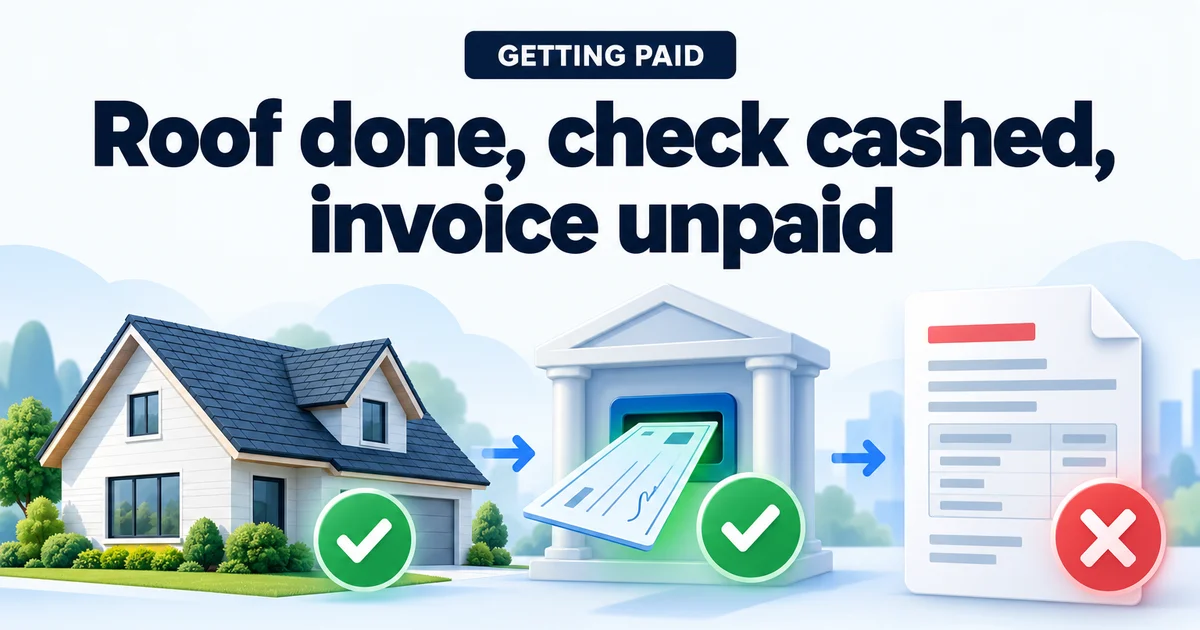
When a roofer is not paid after the homeowner cashed the insurance check, the first job is to find out where the money really is. On many insurance roofs nothing has been spent: part of it is held back by the carrier, or it is sitting with the mortgage company. If the money did reach the homeowner and they are keeping it, the next steps are a written demand with a date in it and, in Illinois, a claim for lien recorded within four months of finishing the roof.
I build CRM For Claims, a CRM for roofing and restoration companies that work insurance claims. The unpaid roof is one of the worst feelings in this trade, because the shingles are already on the house and you have no leverage left except paper. This article is the order I would work it in, with the Illinois rule read from the statute itself.
Is the money gone, or just not released yet?
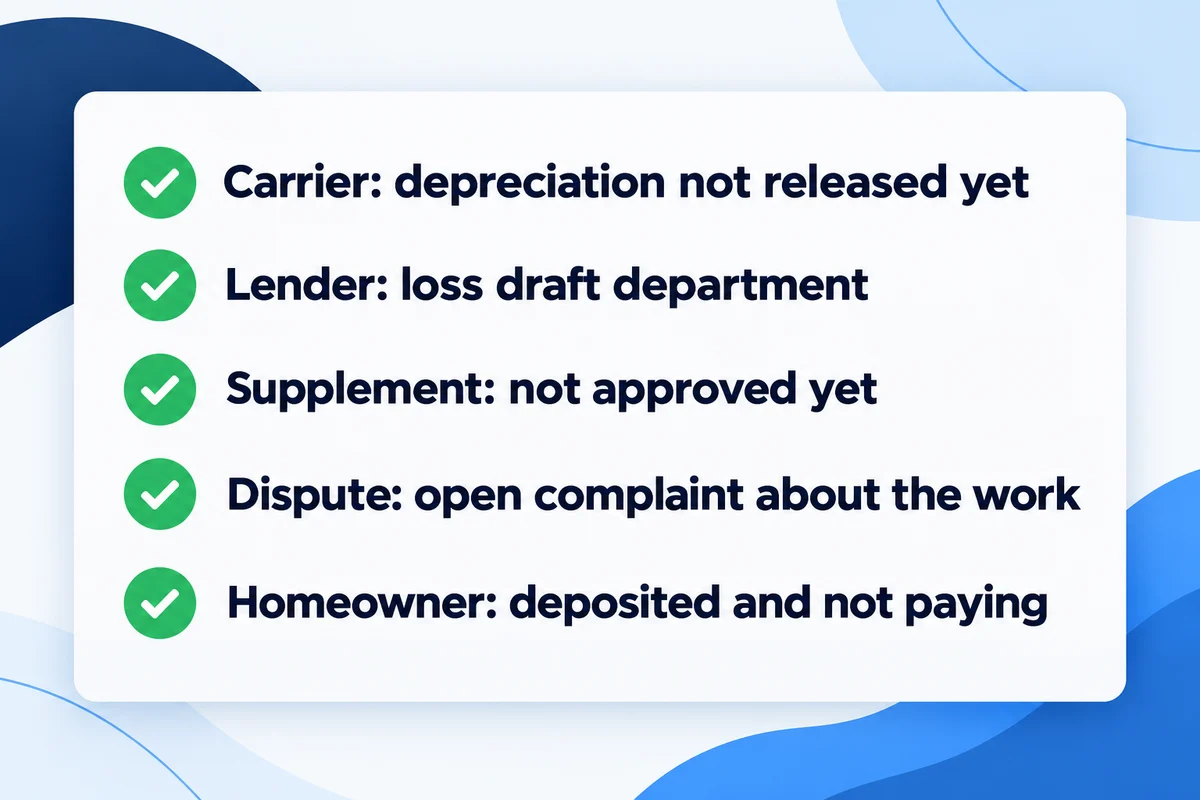
Usually it has not been released yet. An insurance roof is paid in pieces, and a homeowner who says "I gave you what I got" is often telling the truth. Before you send anything that sounds like a threat, check which of these five situations you are in, because only the last one is a collection problem.
| Where the money sits | How you can tell | Your next move |
|---|---|---|
| With the carrier | The first check matched the actual cash value, and the scope shows recoverable depreciation still owed. | Send the completion proof and the final invoice to the carrier so the holdback is released. |
| With the lender | The check named the mortgage company too, and the homeowner mailed it to the loss draft department. | Ask the homeowner for the loan number and call the loss draft line together about the inspection and the draw. |
| In a supplement | Your invoice is higher than the approved scope because of items you added after tear-off. | Chase the supplement decision. The homeowner owes you only what the contract says about unapproved items. |
| In a dispute | The homeowner has a complaint about the work, the cleanup or a damaged gutter. | Fix or answer the complaint in writing first. A demand sent over an open complaint reads badly later. |
| In their bank | The check was deposited, the work is complete and accepted, and calls go unanswered. | This is the real case. Start the calendar below. |
The first two rows are where most "they kept the money" stories end. I have written separately about getting recoverable depreciation released after the work is done and about what happens when the mortgage company is on the insurance check. Both are slow, and both feel like non-payment from your side of the table.
One unpaid roof on a calendar
Here is the same plan drawn on one example roof, finished on November 3, 2026, where the homeowner deposited both checks and stopped answering. The dates matter more than the wording, because in Illinois the lien deadline runs from completion whether or not you are still being polite.
- Day 0Tue, Nov 3, 2026
Last work on the roof. Final invoice sent the same day with its due date, plus completion photos and any certificate the carrier asked for.
- Day 3Fri, Nov 6
A phone call that only asks where the money is. Which check came, who it was made out to, whether it went to the lender. Write the answers on the claim, not on a sticky note.
- Day 14Tue, Nov 17
A short written reminder by email and by text: the amount, the invoice number, the due date that has passed, and how to pay.
- Day 30Thu, Dec 3
The demand letter, sent by certified mail and by email. It names a payment date 15 days out.
- Day 45Fri, Dec 18
No payment: hand the file to a construction attorney. Bring the contract, the scope, the invoices, the check copies and the call log.
- Day 120Wed, Mar 3, 2027
Four months after completion. A claim for lien recorded after this date can still be enforced against the owner, but not against the bank, other creditors or a buyer. Plan to record weeks earlier, not on this day.
Two things move this calendar. If you go back for a punch item, the statute counts extra or additional work separately, so ask your attorney which date is your completion before you rely on a later one. And if the homeowner pays part, credit it on the invoice the same day, because the lien has to state the balance after all credits.
The demand letter, written to be read once
The letter is for two readers: the homeowner today, and a judge or an attorney a few months from now. Keep it to facts they can check against the paper. No adjectives, no guesses about where the money went, and no threats you are not entitled to make.
Date
Sent by certified mail and email to homeowner name, property address
Re: Roof replacement at property address, contract signed date, claim number number
We completed the roof replacement on completion date. Our final invoice number for amount was due on due date. Our records show the insurance payments for this work were issued to you on dates. We have received amount paid, which leaves a balance of balance.
Please pay the balance by date, 15 days out by check to the address below or by any method listed on our invoice. If part of the money is still with your carrier or your mortgage company, call me before that date and we will work it out with them together.
If we do not hear from you by that date, we will take the steps the law allows to collect, including a claim for lien against the property.
Name, title, company, phone
The middle paragraph is there on purpose. It gives a homeowner who is waiting on a lender an easy way to answer without losing face, and it shows anyone reading the file later that you offered one. The insurance dates come from the copies of the checks or from the carrier's payment letter, so ask the homeowner for those at the day 3 call.
What Illinois wants in a claim for lien
Section 7 of the Illinois Mechanics Lien Act, 770 ILCS 60/7, says a contractor cannot enforce the lien against other creditors, lenders or buyers unless, within 4 months after completion, they either sue to enforce it or record a claim for lien with the recorder of the county where the house is. The same section lists what the claim for lien contains:
- an affidavit, signed by you, your agent or your employee, that verifies it;
- a brief statement of your contract;
- the balance due after allowing all credits;
- a description of the lot or tract that is correct enough to find it.
That is the whole reason the calendar ends in March. Lien law changes a lot from state to state, in the notices, the deadlines and the forms, so outside Illinois look up your own statute and let an attorney record the lien. Once the money comes in, the lender or the title company will ask you for a release, and the article on matching a lien waiver to each insurance check covers which one to sign.
Keeping the chase on the claim in CRM For Claims
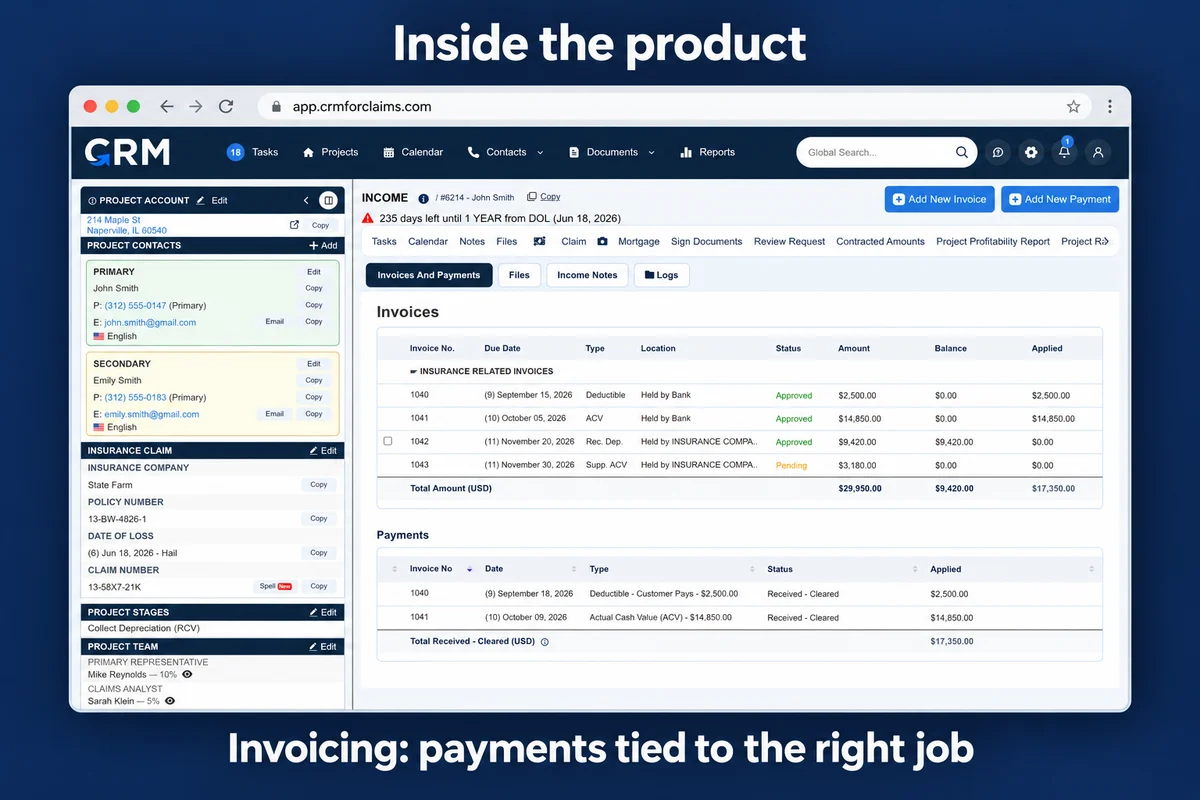
Every step above depends on dates and amounts that somebody wrote down at the time. In CRM For Claims, each invoice carries its Invoice Due Date, and the office can change the due date when a payment plan is agreed. When a check comes in, the payment records who the check was payable to, and that list includes the project's mortgage companies, so the triage in the table starts from the record instead of from memory.
The calendar becomes tasks on the project: every task has a Task Due Date, so the day 14 reminder, the day 30 letter and the date to call the attorney are assigned to a person and show up on time. The rest of the money side of a claim is on the features page, and the plans start at $59 a month.
If you have a roof like this one open right now and want to see how it would sit in the CRM, book a walkthrough with me and bring the file.