A loss draft inspection is the mortgage company's check that the repairs match the repair plan, and on a monitored roof claim the next release of insurance money waits on it. Someone has to ask for it, usually the homeowner or whoever they authorize in writing, and it should be requested the day the work is ready. Anything on the adjuster's scope that is still unfinished can hold the final check back.
I build CRM For Claims, a CRM for roofing and restoration companies working insurance claims, and most of the paper on this subject is written to the borrower. So I read what four lenders publish and turned it around for the person on the other end of the check: the roofer who has bought the shingles and is waiting for the second draw.
Who orders a loss draft inspection, and who pays for it?
It depends on the lender, and the three below don't agree. All three take the request from the borrower's side, not from a schedule of their own, so if nobody calls, nothing happens. Who pays differs too: two absorb the cost, and one bills visits after the first to the homeowner's account.
| What you need to know | Origin Bank | Rally Credit Union | RoundPoint |
|---|---|---|---|
| When it applies on a current loan | Final inspection on proceeds above $10,000 | Before later releases on proceeds above $40,000 | On monitored claims: above $40,000, or the loan was delinquent at the loss |
| How it gets ordered | Tell the Loss Draft Department the work is complete | Call or email the contact assigned to the case | Call or email at each phase, or when repairs are done |
| Who pays | The bank pays for one. Later visits go on the borrower's account at cost, and never out of the proceeds | The credit union | No charge |
| What the result decides | Whether progress is comparable with the money left | The percent complete. At 100%, the remaining balance is released | Whether results are "sufficient" to release more funds |
| Paper tied to the contractor | License number and a timetable on the estimate above $40,000. A Contractor's Affidavit may be requested | W-9, a detailed estimate with the deposit amount, and a notarized lien waiver from each contractor | A full claim package with contractor details. A written reason or draw schedule if you need more money |
That is what each lender's page said when I read it on November 1, 2026. Treat it as three examples of how far apart this can be, because a sold loan can land with a different desk and a different set of rules. One line changes who you chase: Origin makes draws payable to the homeowner and the contractor jointly, while Rally's page says the disbursement is issued to the member. Why the lender is on the check at all is covered in my article on the mortgage company on the insurance check.
One $64,000 roof and gutter claim, two loan statuses
The fourth rule set is the public one. Fannie Mae's Servicing Guide, section B-5-01, sets the release schedule for the loans it owns, and it turns on one fact the roofer rarely knows: whether the borrower was 31 or more days late at the time of the loss. I ran one made-up $64,000 claim through both branches, with no excess over the loan balance.
Loan current at the loss
The first release can reach the greater of $40,000 or 33% of the proceeds, and 33% here is only $21,120. The other $24,000 follows periodic inspections. This branch says no final inspection is required.
Loan 31 or more days late at the loss
The first release is 25% of the proceeds, capped at $10,000 in this example. Later draws can't exceed 25% ($16,000), each one follows an inspection of the repairs, and a final inspection is required.
Same house, same scope, same carrier. In the first case the first release can pay for the whole material order. In the second, the company has $10,000 from the lender and may have a finished roof before the next money is even requested.
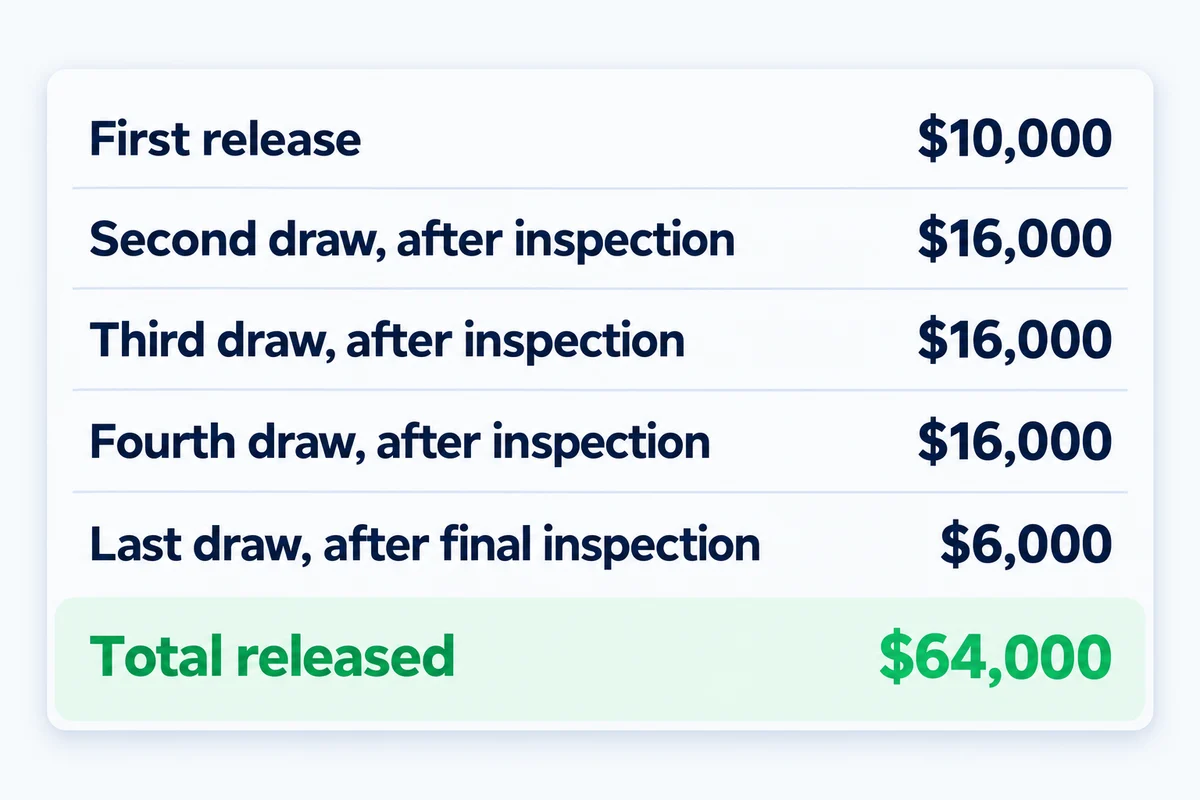
A roof changes how this plays out, because a tear-off and install can take days where a fire rebuild takes months. A rule written for staged work can leave four draws to release on a job that is already done. So ask early whether one completion inspection can release everything still held. None of the pages I read answers that, which makes it a question for the desk.
What is your finished roof compared with?
The plan the lender holds, and that plan is usually older than your roof. Fannie Mae tells the servicer to review the final repair plan and bids, then verify that repairs comply with it. Origin wants the adjuster's report, all pages, and your estimate. Rally asks for the adjuster report and your estimate, and tells members to keep copies for possible review by the inspector.
None of these lenders publishes a roof checklist, so what follows is my advice and not their rule. Here is the order I would have the office work in, before anyone calls to request the visit:
- Print the adjuster's report and mark every line done or not done, including the items outside your trade. A fence or a ceiling repair on that report is part of what the desk thinks is being fixed.
- Send any approved supplement to the desk now. If you added drip edge or decking after tear-off, the plan on their file should already say so.
- If the homeowner dropped an item or hired someone else for it, get that in writing from the homeowner and send it before the inspection.
- Close the punch list first. At a lender that releases the balance at 100%, one missing downspout can mean a second request and a second wait.
- Put dated completion photos, the final invoice and your signed contract in one folder, so the same packet can go to the desk and to the carrier.
- Tell the homeowner an appointment is coming and that the call may be from a number they don't know. The inspection can't happen if nobody answers.
Six questions for the loss draft desk, before the crew arrives
The desk won't talk to you without the homeowner's written authorization (Rally says so outright), so get that signed with the contract. Then one call with the homeowner on the line can settle these.
Is this claim monitored, and what is the first release?
This tells you how much material you can buy with the lender's money and how much you carry yourself.Who orders the inspection, and how much notice do you need?
Count it back from your install date, so the request goes in while the crew is still on the roof.Which document do you measure the work against?
If it is the first adjuster's report, your supplement has to reach them before the visit.Can one completion inspection release everything still held?
On a job finished in days, this decides whether you wait for one visit or several.Who pays if a second visit is needed?
If it lands on the homeowner's account, you want to hear that before you request a visit too early.What is due with the final draw, and who is the check payable to?
A waiver, an affidavit or a certificate that shows up late holds the last check as surely as a failed inspection.
How long does the next check take after the visit?
Expect days, not hours, and budget for it. RoundPoint's page says later installments go out 5 to 7 business days after it receives the inspection results, on claims above $40,000. Origin says it processes a request within 3 business days of receipt. RoundPoint's clock starts once the result is in, so the time to get an inspector out comes on top of it.
Two more items usually land in the same week. The carrier's holdback is separate money with its own proof of completion, and recovering depreciation after the work is done goes through what that packet needs. The lender will also want a release that fits the check it is about to pay, so match the lien waiver to the payment before you sign anything that gives up more than that check covers.
Where the office keeps this in CRM For Claims
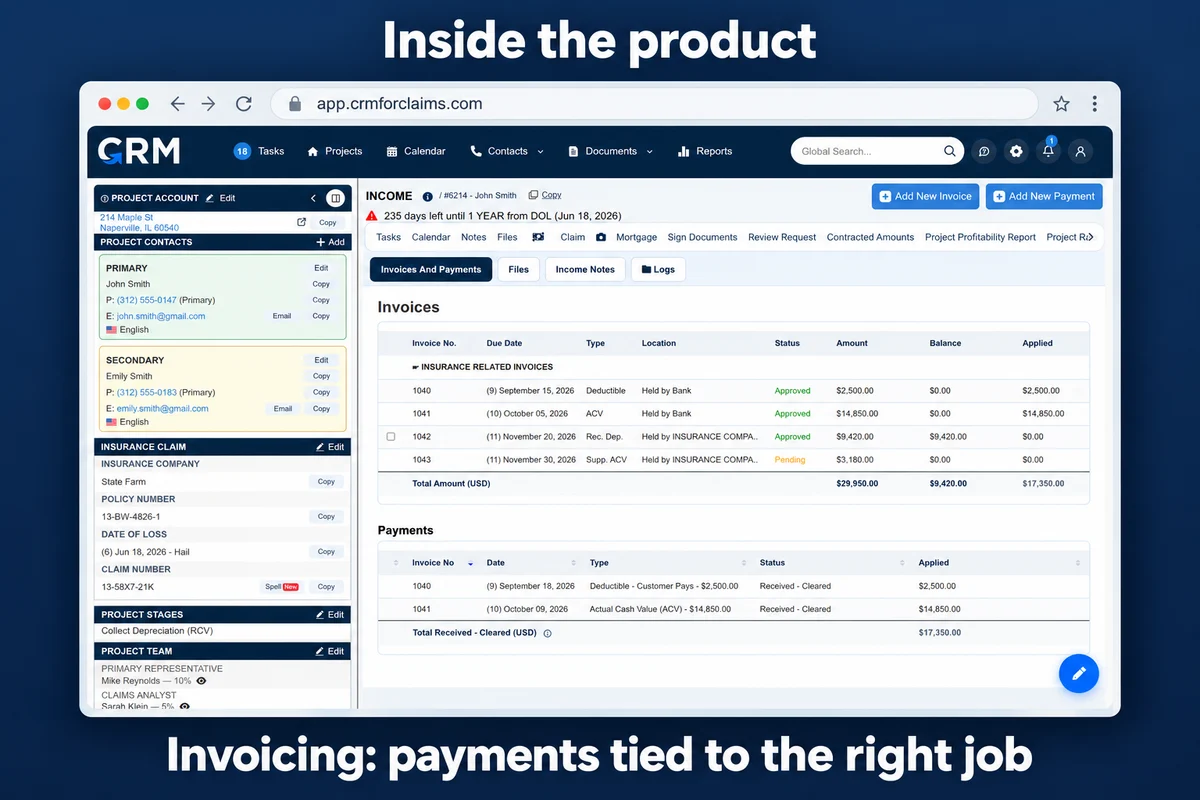
Everything above is dates and answers from phone calls, and it goes wrong when it lives in one person's head. The mortgage company record keeps a Recipient, an Attn line and separate regular and overnight mailing addresses, so the second job with that lender starts from what the first one taught you. The project's Mortgage screen has Mortgage Notes and a Files tab, which is where the six answers belong.
Each invoice has a required Income Invoice Location, and Held by MORTGAGE COMPANY is one of its values, so you can mark the day the money reaches the lender. The Balance Sheet by Payment Location report shows that amount across your jobs, which is the list to read before a morning of calls. The request and the follow-up become tasks, and every task has a required Task Due Date. When the joint check arrives, the payment records who it was payable to, and that list includes the project's mortgage companies.
The screens are laid out on the loss draft tracking page, and the rest of the product is on the features page. If you have a roof waiting on an inspection right now, book a walkthrough and bring that claim, because a stuck file shows more than a sample one.